
We Didn't Call It Biophilic Design
I'm a Gold Coast girl.
I grew up on the Gold Coast in the 1980s, and we were rarely inside. If I wasn't riding my bike, I was at the beach. We swam in the ocean, walked barefoot and spent entire days outdoors without giving it a second thought.
We didn't have to chase nature back then.
It surrounded us.
I realise those early years shaped the way I see the world. I instinctively understood how good it felt to be connected to the outdoors.
Years later, as I began designing homes, I noticed I was repeatedly drawn to the same ideas. More natural light. Better views. Gardens that became part of the home rather than something to glimpse through a window. Natural materials like timber and stone. Soft, restrained colour palettes inspired by the landscape. Spaces that blurred the boundary between inside and outside.
At first, I thought these were simply my personal design preferences.
Then I discovered biophilic design.
What fascinated me wasn't the name itself. It was the research behind it.
Study after study showed that our connection to nature isn't simply something we enjoy - it's fundamental to our wellbeing. Natural light, vegetation, fresh air, organic materials and views of nature have all been shown to reduce stress, improve mood, support cognitive performance and create healthier living environments.
Suddenly, the design decisions I had been making instinctively made complete sense. There was now research to support what I had always felt.
Today, natural elements are even more important in design because we live very differently to how I grew up.
Children spend more time indoors. Many adults work in front of screens all day before returning home to more technology in the evening. We have become increasingly disconnected from the natural environments that were once simply part of everyday life.
For me, nature has become the antidote to the demands of modern living.
As technology continues to dominate our daily lives, our homes have an even greater responsibility to reconnect us with the natural world. Natural materials, abundant daylight, fresh air, gardens, views and a seamless relationship between indoors and outdoors aren't simply aesthetic choices. They're essential counterbalances to lives increasingly spent behind screens.
Once I understood that, biophilic design stopped being something I simply appreciated and became the foundation of every project.
Beautiful homes are easy to admire. Homes that genuinely improve the lives of the people who live in them are far more important.
Today, I can see that philosophy is woven through each of my projects.
At The East Village, biophilic design wasn't just about creating a beautiful beer garden. It was about creating a place people didn't want to leave. Layered planting, natural timber, open air and the shade of a magnificent mature tree transformed the courtyard into the heart of the hotel. Visitors lingered longer, conversations stretched into the evening, and another glass of wine or conversation often followed.
At Kalista, relocating the garage created space for a private courtyard and pool, allowing light and landscape to become part of the home's everyday experience from the moment you arrive. The architecture no longer sat beside the garden - it became immersed within it.
At Lotus in Byron Bay, that philosophy finds perhaps its most natural expression. Rather than imposing something onto the landscape, the intention has always been to strengthen our connection to the very best of what is already there.
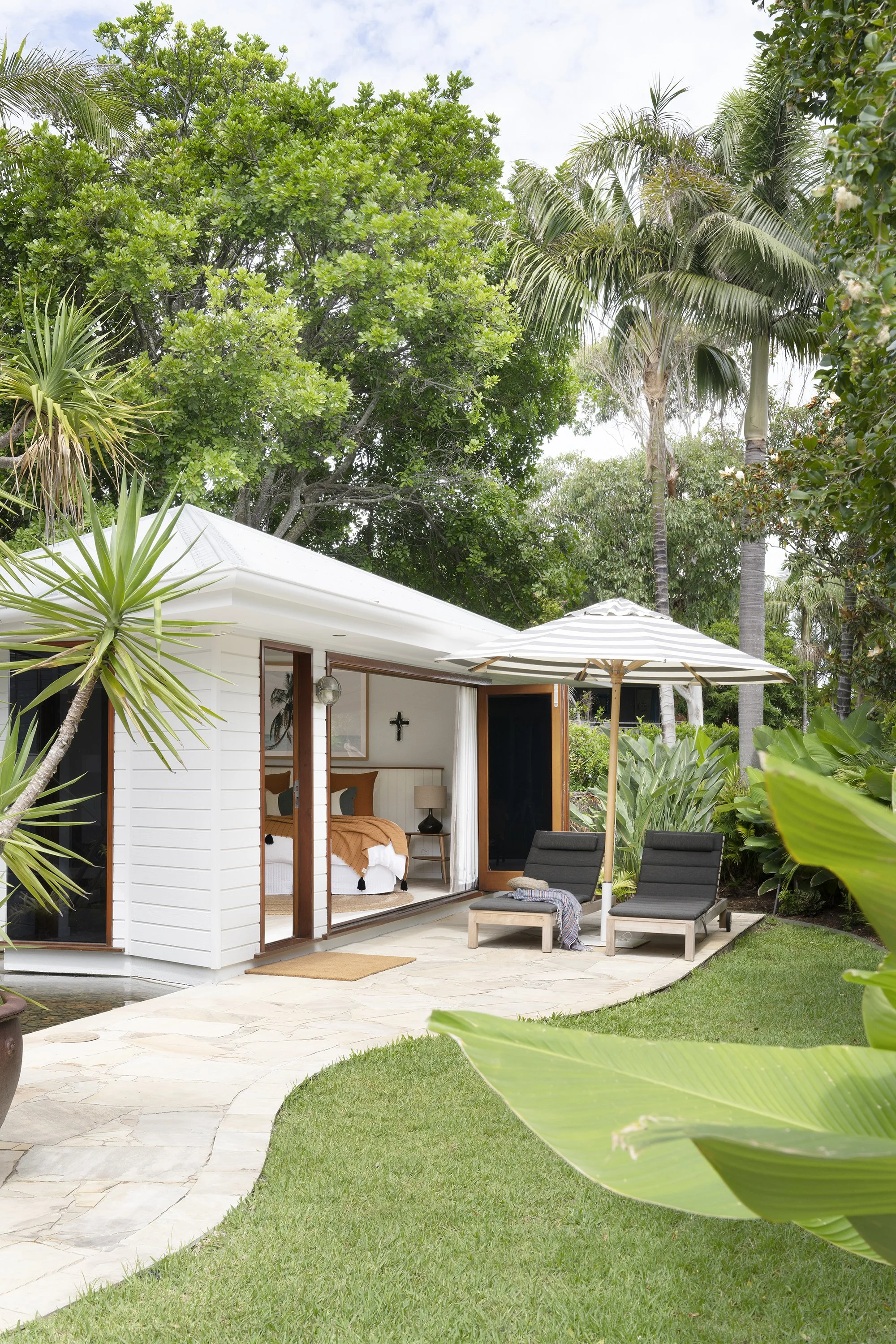
Following this winter's renewal, every internal space will open to grass, stone, gardens and fresh air. The magnesium pool and full-spectrum infrared sauna encourage guests to step outdoors, while natural materials have been chosen for their warmth, texture and authenticity.
These design decisions for Lotus have been influenced by the question:
How can this place help people experience the very essence of Byron Bay?
To slow down. Breathe more deeply. Spend more time outdoors. Feel the sun, the sea breeze and the gardens. Leave feeling calmer than when they arrived—and perhaps have a little more fun along the way.
Guests may even rediscover the simple joy of living outdoors - a feeling I was fortunate enough to experience growing up on the Gold Coast.
That's why Byron Bay has always felt like the right place for this next chapter.
Because it reminds me of something I understood long before I knew what biophilic design was called.
We were never meant to feel separate from nature.
The best places simply help us find our way back there.